
Recycling Campaign
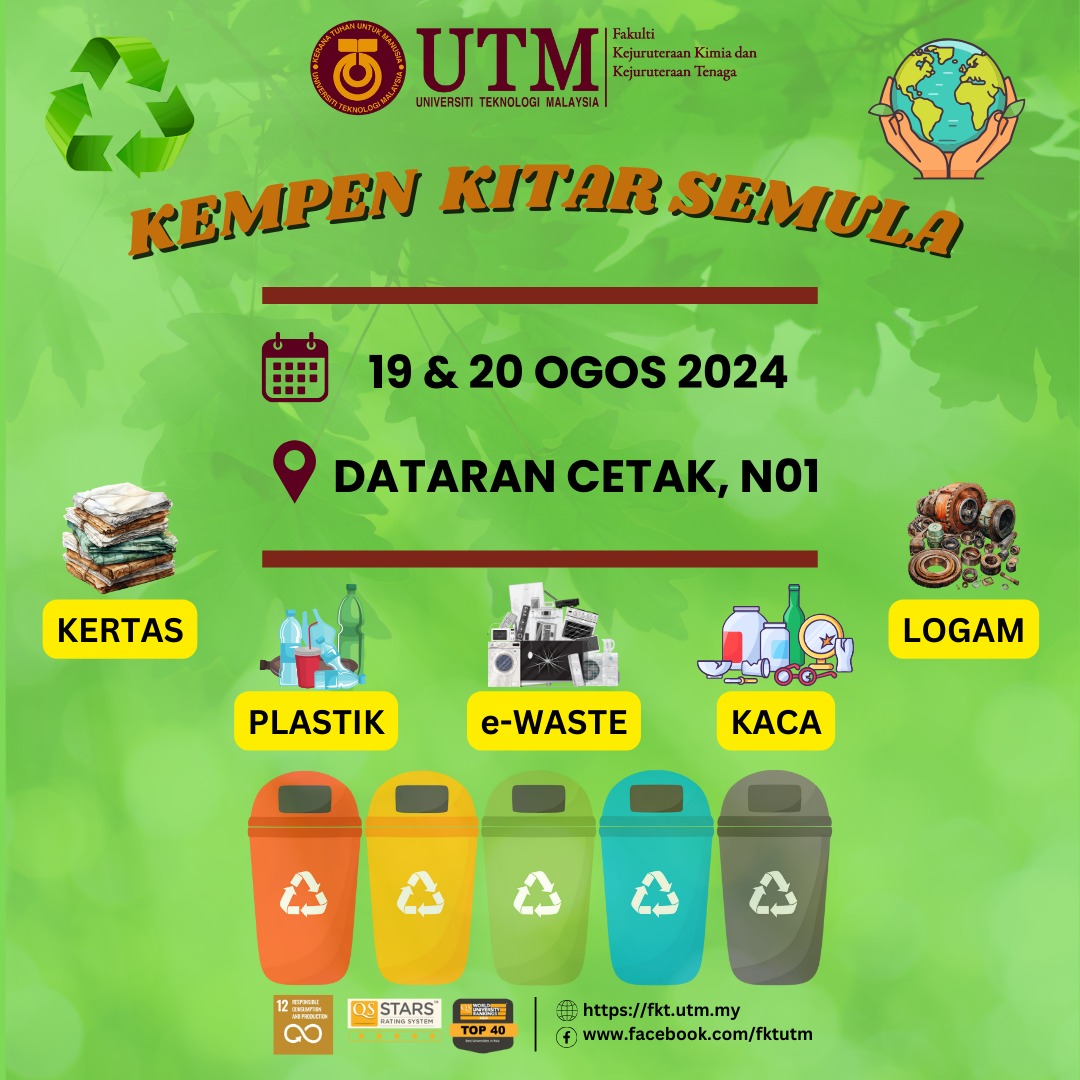
19 & 20 August 2024
Recycling Campaign
♻️ Recycling Campaign: Towards a Greener Tomorrow
At FKT, sustainability isn’t just a buzzword—it’s a responsibility we all share. The Recycling Campaign is part of our ongoing effort to build a cleaner, greener campus by promoting responsible waste management and environmental awareness among students, staff, and visitors.
🌍 Why It Matters
Every day, recyclable materials like paper, plastics, metals, and e-waste end up in landfills. Through this campaign, we aim to:
-
Reduce campus waste and environmental impact
-
Encourage a culture of recycling and sustainability
-
Educate the community about proper recycling practices
-
Support Malaysia’s national environmental goals
🔄 What We’re Doing
As part of the campaign, we’ve introduced several initiatives to make recycling easy and accessible:
-
Clearly labeled recycling bins placed at strategic locations around campus
-
Awareness booths and workshops on how and what to recycle
-
Monthly recycling drives where you can drop off e-waste, plastics, and more
-
Upcycling projects and competitions to spark creativity and eco-innovation
💬 Get Involved!
Whether you’re a student, lecturer, or visitor, your actions matter.
Start small—separate your waste, use the recycling bins, and encourage your peers to do the same. Together, we can make a lasting difference for our planet and future generations.
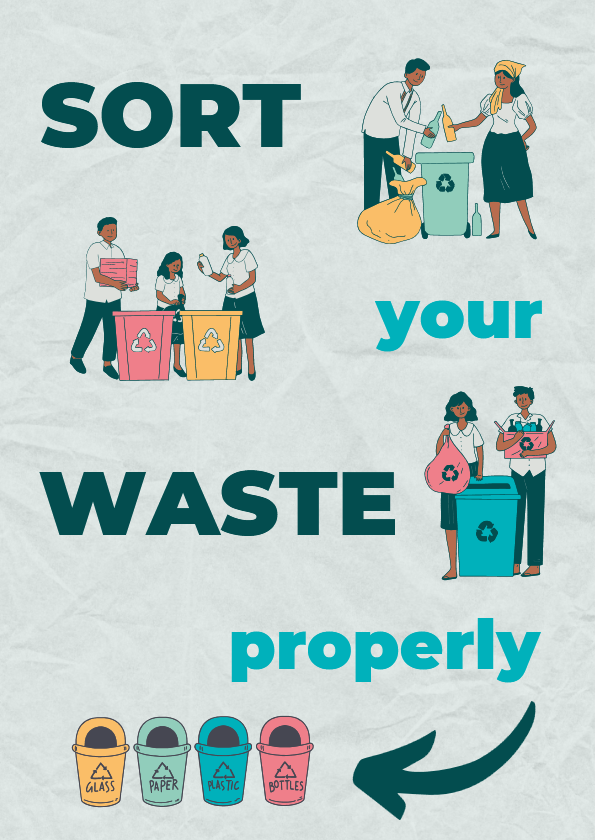
🗑️ Sort Your Waste Properly
A Simple Habit for a Cleaner, Greener World
Sorting your waste may seem like a small task, but its impact is enormous. The “Sort Your Waste Properly” Campaign encourages everyone in our community to take responsibility for how we dispose of our trash—because proper waste segregation is the first step toward a sustainable future.
💡 Why Sorting Matters
Improperly sorted waste can contaminate recyclables, increase landfill use, and even harm the environment. By separating waste correctly, we can:
-
Reduce pollution and landfill waste
-
Maximize recycling efforts
-
Protect our ecosystems and wildlife
-
Support Malaysia’s environmental sustainability goals
🧃🍃🔋 Know Your Waste Categories
Here’s a quick guide to help you sort your waste properly:
-
Recyclables: Paper, cardboard, plastics, glass, and metal cans
-
Organic Waste: Food scraps, garden waste, and biodegradable items
-
Non-Recyclables: Contaminated packaging, used tissues, and certain plastics
-
Hazardous Waste: Batteries, electronics, chemical containers (should be disposed of through special collection points)
🍽️ Wasting Food = Warming Planet
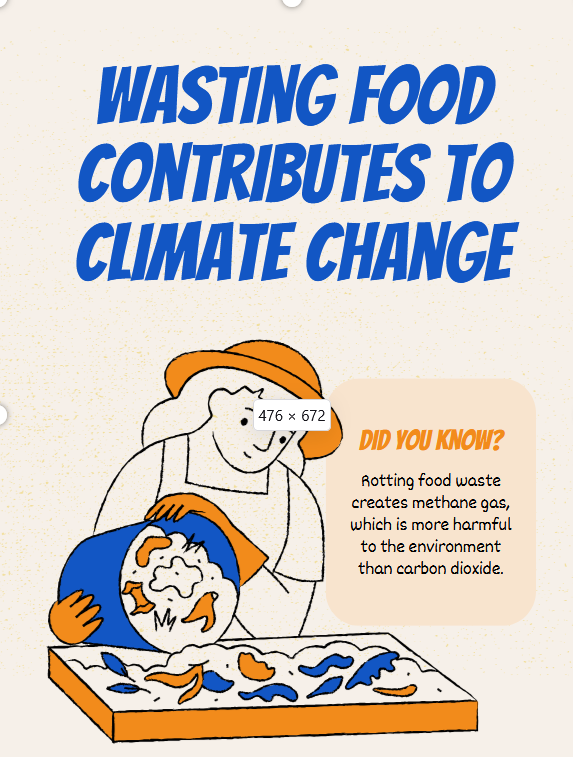
How Food Waste Fuels Climate Change
When we talk about climate change, we often think of factories, cars, and fossil fuels—but there’s another major contributor hiding in plain sight: food waste.
Every time we throw away uneaten food, we’re not just wasting a meal—we’re also wasting all the energy, water, and resources that went into producing, processing, transporting, and storing it. Worse still, when food ends up in landfills, it decomposes and releases methane, a greenhouse gas over 25 times more potent than carbon dioxide.
🌍 The Big Picture: Global Impact
-
About one-third of all food produced globally is wasted
-
If food waste were a country, it would be the third-largest emitter of greenhouse gases after China and the U.S.
-
Wasted food = wasted land, water, fertilizer, fuel, and labor
-
Methane from food in landfills significantly accelerates global warming
🥦 Where It Happens
Food waste happens at every stage of the supply chain:
-
Farms: Crops left unharvested due to quality standards
-
Markets & Stores: Unsold or expired food thrown away
-
Restaurants & Cafeterias: Oversized portions or unsold meals
-
Households: Leftovers forgotten, overbuying, improper storage
💡 What You Can Do
Everyone can help reduce food waste—and fight climate change—by making small changes:
-
✅ Buy only what you need
-
🍽️ Save leftovers and eat them later
-
🧊 Store food properly to extend freshness
-
💚 Compost food scraps instead of throwing them away
-
📦 Donate surplus food when possible
🌱 It’s Time to Rethink Our Plates
Food is precious. Wasting it not only impacts our wallets, but our world. Reducing food waste is one of the easiest and most effective ways we can all help combat climate change. By being more mindful of what we consume and what we discard, we can make a big difference—one plate at a time.
