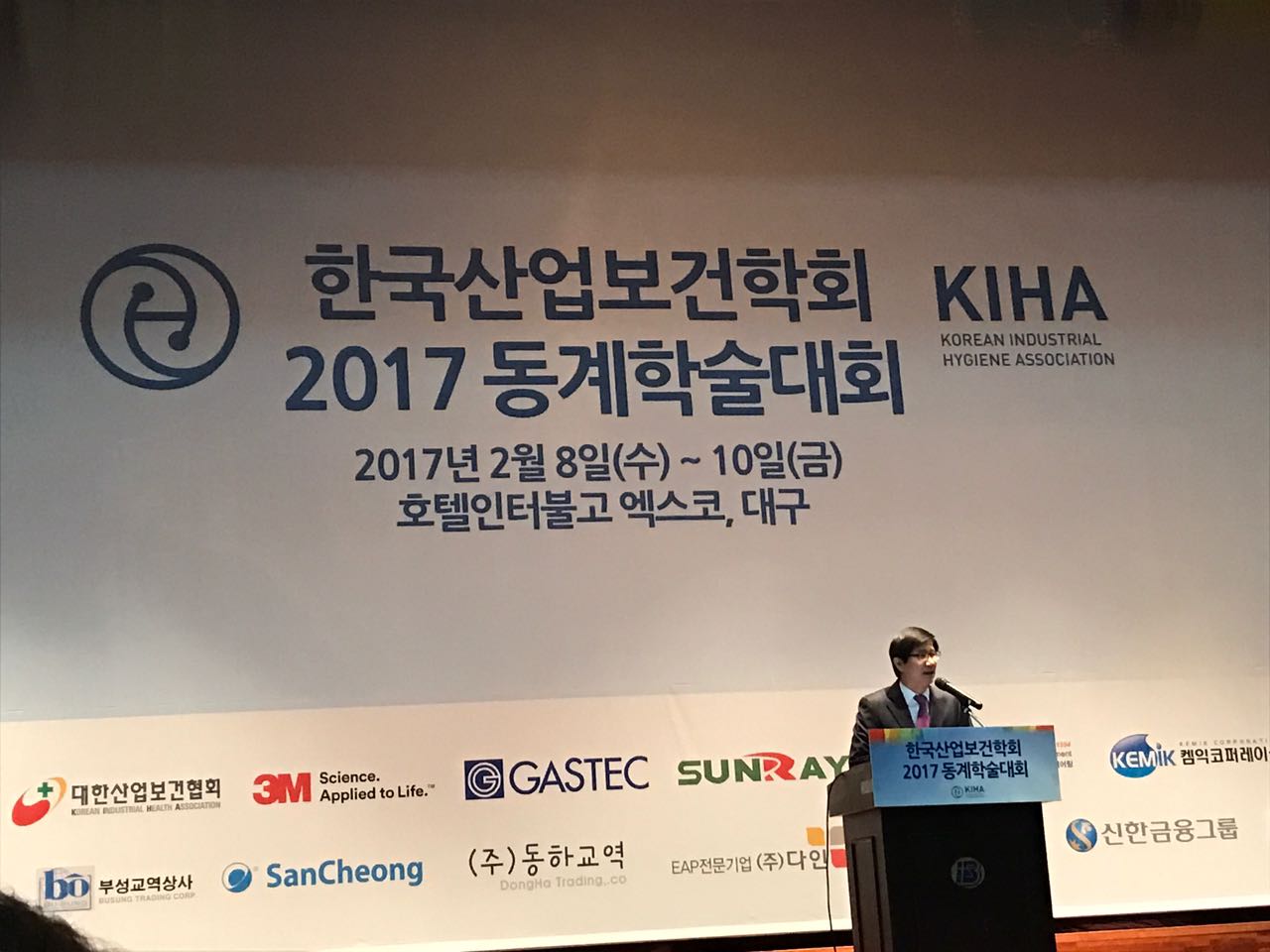
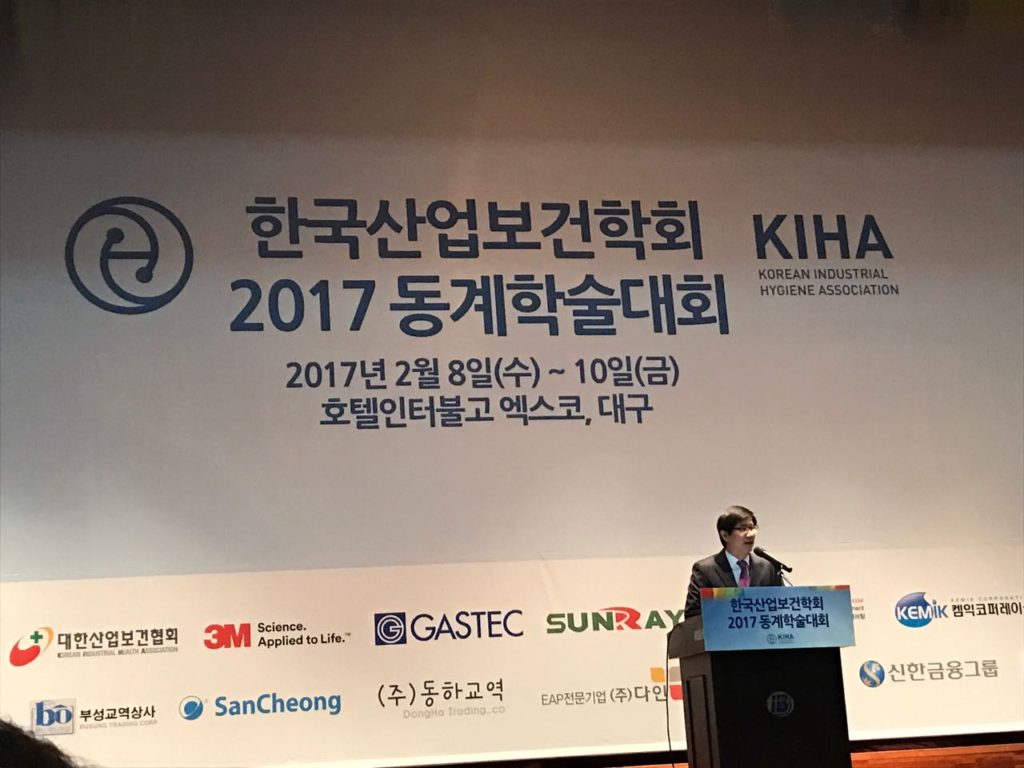
Korean Industrial Hygiene Association (KIHA) is a member of International Occupational Hygiene Association (IOHA) was established to improve, promote and develop occupational hygiene worldwide through its member organisations, and to improve and maintain a safe and healthy working environment for all.
Recently, Assoc. Prof. Ir. Dr. Mimi Haryani Hassim was invited to attend the Korean Industrial Hygiene Association (KIHA) 2017 Conference that was held at Hotel Inter-Burgo Exco, Daegu, South Korea from 8-10th February 2017.
On behalf of FCEE, we are pleased to share the experience of Dr Mimi‘s story during the conference. The following articles is the coverage throughout the conference by Dr Mimi.
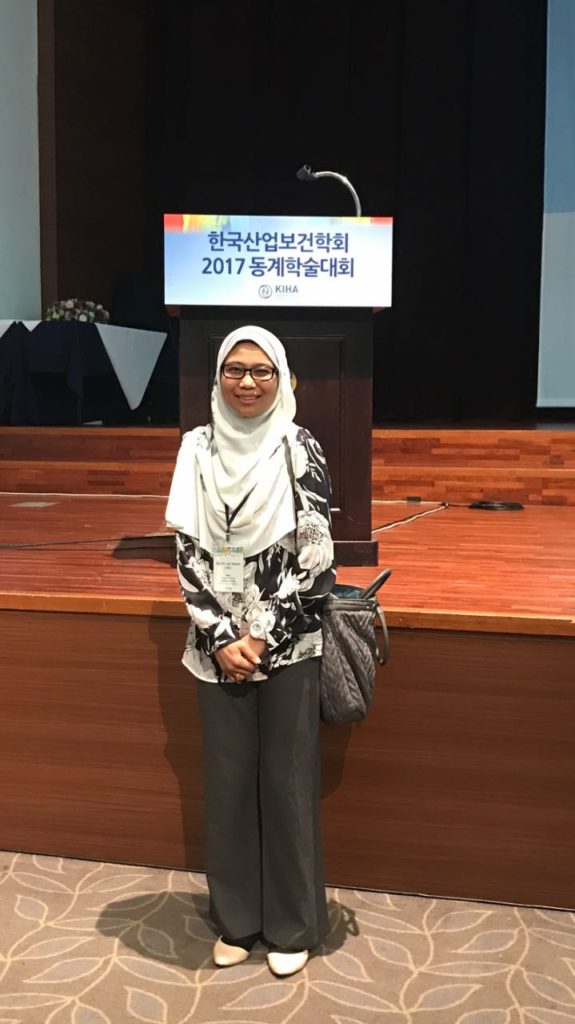
As a member of the Malaysian Industrial Hygiene Association (MIHA),I am grateful to be offered by the Korean Industrial Hygiene Association (KIHA) to be one of the five from Malaysia to attend the winter conference organized by KIHA from 8-10th February 2017 at Hotel Inter Burgo Exco, Daegu, Korea.
The KIHA basically covers all local expenses for their international delegates. This winter conference was actually done in Korean language, but they have one day for the international delegates (on the 9th February 2017), in which all the keynote speeches were translated and all the papers presented were in English. There were around 600 participants with several international delegates from Australia, Netherlands, Hong Kong, China, Thailand and Malaysia.
The keynote speeches for this conference were revolved around the theme of the recent methanol poisoning cases due to the CNC operation involving world renowned mobile phone manufacturing company. The cases received a lot of attention from the government as well as the media and this issue was greatly discussed during the conference.
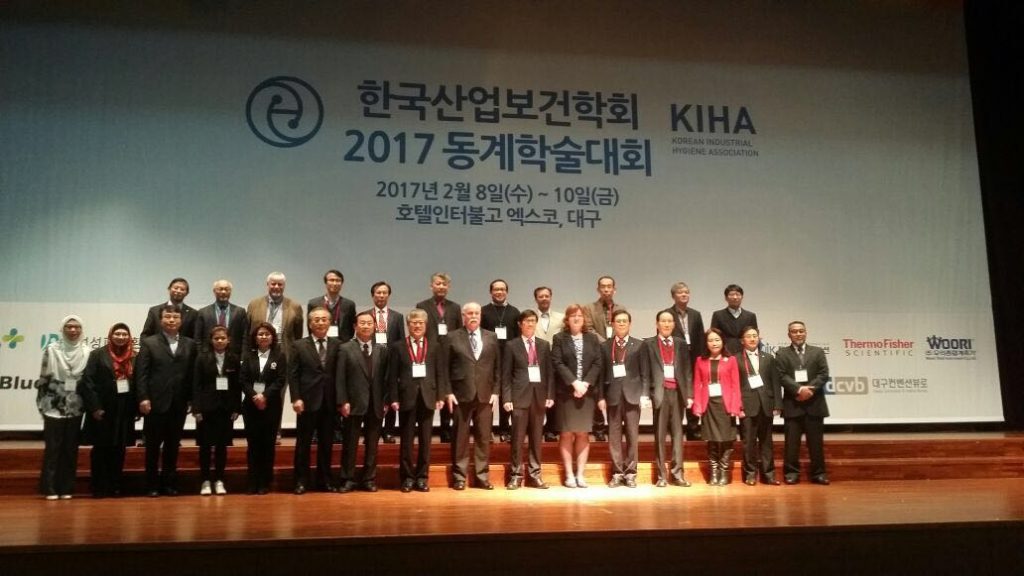
On the afternoon session of the 9th February 2017, each representative from each country presented on the occupational safety and health related laws and regulations in each country besides sharing about the threshold exposure limits of each country. The reason for having these presentations is to ultimately discuss on the efforts to come out with an agreed standard exposure limits for Asian region. These limits are not meant to substitute the national exposure limits of each country, but to act as a guidelines or references for all Asian countries. This is important since currently, every country has different exposure limits and the challenge appears in cases where it is kind of a trend now that the developed countries are transferring their hazardous plants to the neighboring developing countries. Therefore, under the umbrella of Asian Network of Occupational Hygiene (ANOH), it is agreeable that the Asian region should have a common, mutually agreed exposure limits as a guidelines for a better protection of the workers from occupational exposure hazards.

The conference went so well and we felt so welcomed throughout the conference especially with the Presidential dinner on the first night of the conference at Dong Sim Gak restaurant, a very nice traditional looking restaurant in the middle of skyscraper buildings at the city of Daegu. We were served with the wonderful local Korean dishes. On the second night of the event, we were invited to the Gala dinner, taking place at the hotel itself. Again, we were blessed with the wide spread of various Korean fusion foods. The international delegates were further celebrated by the host by taking us for the Daegu City Tour on the last day of the conference. We visited the first, original Samsung factory site, Hyangchon Cultural Centre and Yangnyeongsi Oriental Medicine Museum.
Overall the conference was great and we had so many opportunities to collaborate with other researchers met during the event. We even discussed on potentiality for co-supervising students, offers placement for research students attachment placement, partly sponsored research works with universities in Korea and acting as examiner for students’ defense. We hope to have a chance to attend the ANOH conference in Guangzhou, China, November 2017. The conference will be very meaningful since it is where the outcomes on the Asian based exposure limits project will be presented.
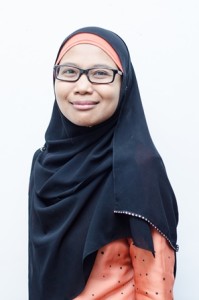 |
Assoc. Prof. Dr. Mimi Haryani Hassim is currently a senior lecturer from Department of Chemical Engineering, Faculty of Chemical & Energy Engineering, Universiti Teknologi Malaysia. She is a Chartered Engineer with the Institution of Chemical Engineers UK (IChemE). She is an established and world pioneer researcher working on inherent occupational health studies of chemical processes. She is also the subject editor (Chemical Safety and Occupational Health) for PSEP. She also has been appointed as the technical English editor for The Journal of Sustainable Development of Energy, Water and Environment Systems (JSDEWES).
She have been using this teaching technique in different chemical engineering subjects (both undergraduate and postgraduate) for many years. Several papers has been published describing the application of this teaching approach in chemical engineering programmes. |